

Is Business Setup in Dubai 2026 Tax Free?
The perception of Dubai as an entirely tax-free haven for businesses has seen significant evolution. While the emirate retains many attractive fiscal policies, the landscape for business setup in Dubai in 2026 is no longer one of absolute zero taxation across the board. Recent legislative changes, particularly the introduction of Corporate Tax, mean that entrepreneurs and companies must now approach their business setup with a nuanced understanding of the prevailing tax regime. It is crucial to examine the specifics to accurately determine the financial implications for operations in the coming years.
Key Takeaways
- Dubai is no longer entirely ‘tax-free’ due to the introduction of a federal Corporate Tax.
- A 9% Corporate Tax rate applies to mainland businesses with taxable profits exceeding AED 375,000.
- Free Zones offer significant tax advantages, including a 0% Corporate Tax rate on qualifying income for eligible businesses.
- A 5% Value Added Tax (VAT) is applicable to


Latest Electric Vehicle Supply Chain Trends and Auto Industry News
Macro Stage and Core Thesis
Despite regulatory headwinds, shifting regional subsidies, and uneven local adoption curves, global electric vehicle sales continue to expand, tracking toward capturing over a quarter of the total passenger vehicle market. However, the primary operational bottleneck for original equipment manufacturers (OEMs) has fundamentally shifted away from consumer demand toward structural, multi-tiered supply chain complexity. Industry leaders now face intense friction spanning upstream critical mineral price volatility, midstream processing constraints, and deep-seated software architecture dependencies. Navigating this landscape requires a complete overhaul of legacy procurement strategies as automakers race to secure their competitive footing in an increasingly volatile global market.
Upstream Pressures: The Critical Minerals Power Play
Upstream raw material markets for lithium, copper, cobalt, and rare earth elements remain subject to intense price instability and geopolitical maneuvers. Export restrictions—such as tighter controls on cobalt outflows from the Democratic Republic of Congo and evolving trade policies out … Continue reading >>>>
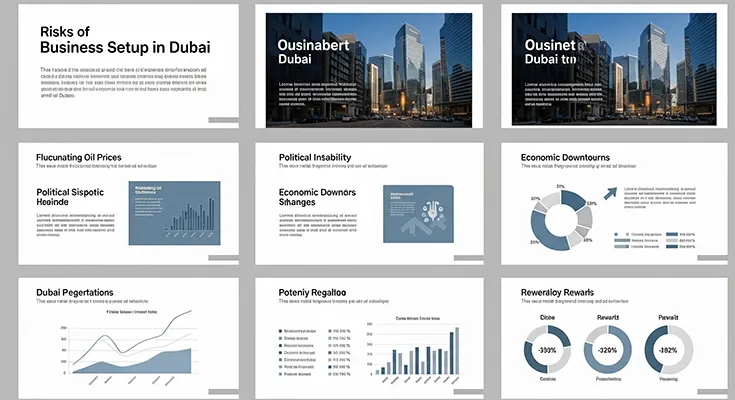
What are the risks of business setup in Dubai?
Key Takeaways:
- While Dubai offers numerous advantages, potential risks for Business setup in Dubai include regulatory complexities and evolving compliance requirements.
- The highly competitive market can make it challenging for new businesses to establish a strong foothold.
- Corporate bank account opening can be a lengthy and rigorous process, posing a significant hurdle for new entities.
- Cultural nuances and language barriers, although often minor in the business sphere, can present communication challenges.
- Misunderstanding jurisdictional limitations (mainland vs. free zone) can restrict market access and future growth.
Dubai has rightfully earned its reputation as a global business hub, attracting entrepreneurs and investors with its attractive tax policies, strategic location, and modern infrastructure. However, like any major economic center, a Business setup in Dubai is not without its potential risks and challenges. Acknowledging and understanding these factors is crucial for effective planning and to build a resilient venture in this dynamic environment. … Continue reading >>>>
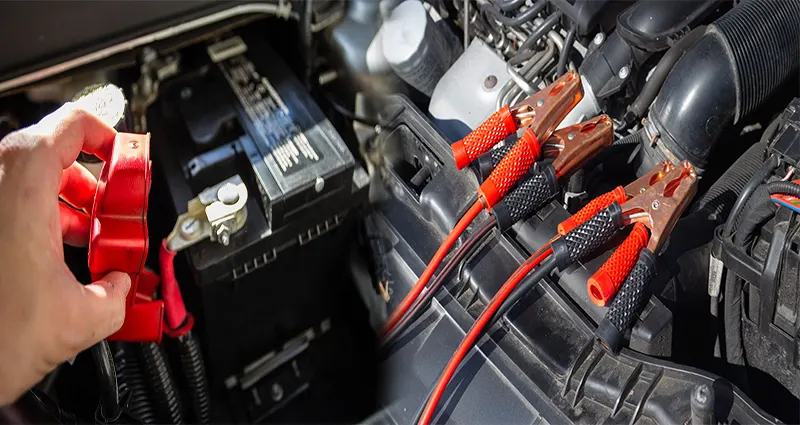
How to Diagnose Battery Problems in Electric Cars
Electric vehicles have gained immense popularity in recent years due to their environmentally friendly nature and cost-effective operation. One crucial component of an electric car is its battery, and diagnosing any problems with the battery is essential to ensure optimal performance and longevity. Here are some key steps on how to diagnose battery problems in electric cars:
Step 1: Check for Dashboard Warnings
One of the first signs of a potential battery issue in an electric car is the appearance of dashboard warning lights or error messages related to the battery system. These warnings may include indicators such as a low battery symbol, a check engine light, or a message indicating battery malfunction. If any of these warnings appear, it is important to address them promptly to prevent further damage to the battery.
Step 2: Monitor Driving Range
Another way to diagnose battery problems in an electric car is to … Continue reading >>>>
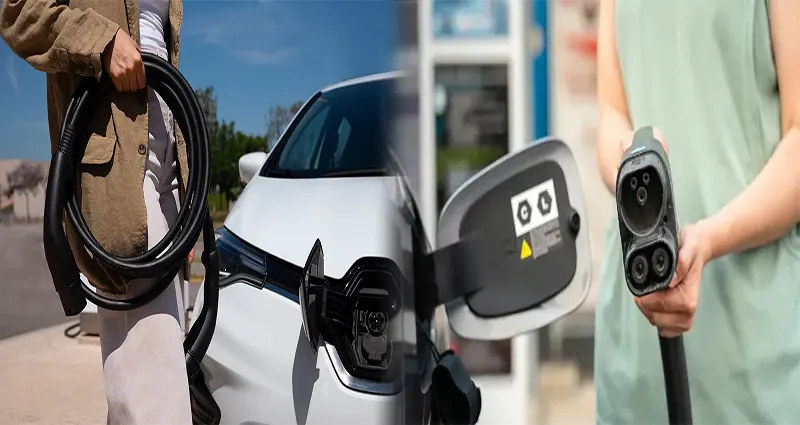
Types of Electric Car Charging Systems and Their Efficiency
As electric vehicles continue to gain popularity due to their environmental benefits and cost-effective operation, the demand for efficient and reliable charging systems is on the rise. Various types of electric car charging systems are available to cater to different needs and preferences. Understanding the different options can help electric vehicle owners optimize their charging experience. Here are some of the most common types of electric car charging systems and their efficiency:
Level 1 Charging
Level 1 charging is the most basic and slowest form of charging for electric vehicles. It involves using a standard 120-volt household electrical outlet to deliver power to the vehicle’s battery. While Level 1 charging is convenient and accessible, it is also the least efficient option as it provides the slowest charging speeds. This type of charging is ideal for overnight charging or for emergency situations when a faster charger is not available.
Level 2
… Continue reading >>>>