
Automotive Manufacturer Financial Performance and Market Forecast Updates

The 2026 Macroeconomic Reality

The global automotive sector operates in a fragmented, highly regionalized, and cost-constrained environment marked by uneven electric vehicle (EV) adoption and shifting trade protectionism. While top-line unit sales remain stable near 91.8 million units globally, a sharp divergence between revenue generation and operating profitability is forcing automakers to radically overhaul their capital deployment and cost structures.

OEM Profitability Pressures and EBIT-Per-Vehicle Metrics

Recent financial performance tracking reveals that the operational profitability of major global manufacturers has contracted significantly.

  • Margin Compression: The average group earnings before interest and taxes (EBIT) per vehicle delivered dropped roughly 16% to approximately 1,187 euros, while overall industry EBIT margins slipped to an average of 3.3%.
  • Root Causes: This margin erosion is driven by aggressive retail price wars, slowing consumer uptake of battery electric vehicles (BEVs) in Western markets, and expensive platform realignment outlays.
  • Legacy vs. Pure-Play Strain: Traditional legacy players face
… Continue reading >>>>
Software Defined Vehicle Market Insights and Automotive Tech News

The Centralized Computing Paradigm

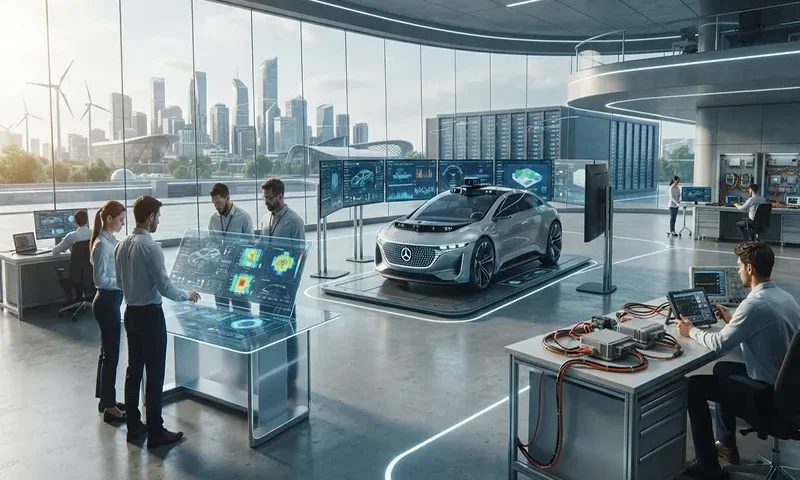
The automotive industry has crossed a decisive structural threshold, moving definitively away from distributed, single-function electronic control units (ECUs) toward centralized domain and zonal computing architectures. Valued at over $600 billion globally, Software-Defined Vehicles (SDVs) are no longer viewed as experimental concepts. Instead, they represent the core operational determinant of vehicle valuation, user experience, and long-term recurring revenue streams for both legacy original equipment manufacturers (OEMs) and electric vehicle pure-plays.

Zonal E/E Architectures and Silicon Convergence

The structural migration from dozens of isolated microcontrollers to high-performance zonal controllers and central compute clusters is redefining physical vehicle design.

  • Hardware and Software Decoupling: By routing local sensors and actuators through 4 to 6 regional zone controllers connected via multi-gigabit automotive Ethernet backbones, automakers are cutting wiring harness lengths by up to 60%, drastically reducing vehicle curb weight.
  • High-Performance SoCs: Advanced system-on-chips (SoCs) equipped with integrated AI accelerators now
… Continue reading >>>>
Global Automotive Industry News and New Vehicle Production Outlook

The Macro Manufacturing Landscape

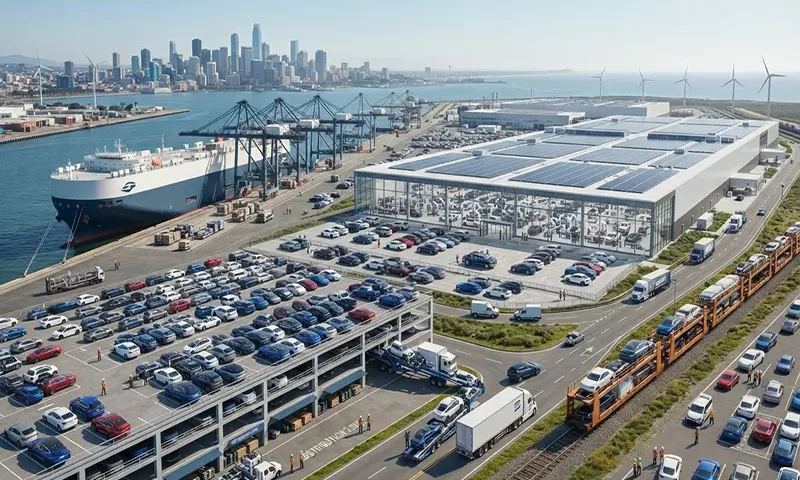
Global vehicle production is navigating a complex transition phase, balancing plateauing legacy volumes against accelerating electric and software-defined architectures. With global light vehicle production stabilizing at approximately 93 million to 94 million units, original equipment manufacturers (OEMs) face intense operational pressures. Slowing consumer demand in select Western markets, shifting subsidy frameworks, and evolving trade protectionism require automakers to restructure global supply chains, optimize capacity utilization, and adapt factory floors to multi-powertrain realities.

Regional Production Shifts and Footprint Redundancy

Manufacturing footprints are fragmenting as trade policies, local content rules, and dynamic tariff frameworks force a widespread move toward localized sourcing.

  • North America and Europe: Legacy producers are grappling with high operating costs, excess capacity, and uneven EV demand curves. To mitigate risk, plants are rapidly retooling to support flexible, multi-powertrain assembly lines capable of mixing internal combustion engines (ICE), hybrids (HEVs), and battery electric vehicles (BEVs) on
… Continue reading >>>>
Latest Electric Vehicle Supply Chain Trends and Auto Industry News

Macro Stage and Core Thesis

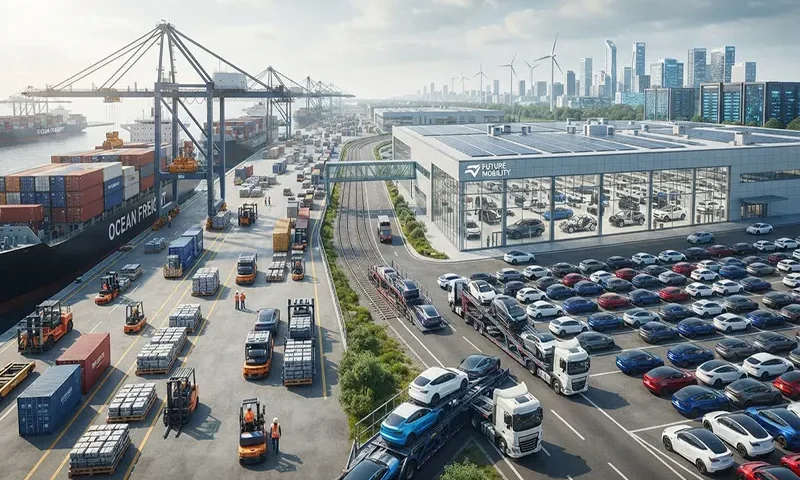
Despite regulatory headwinds, shifting regional subsidies, and uneven local adoption curves, global electric vehicle sales continue to expand, tracking toward capturing over a quarter of the total passenger vehicle market. However, the primary operational bottleneck for original equipment manufacturers (OEMs) has fundamentally shifted away from consumer demand toward structural, multi-tiered supply chain complexity. Industry leaders now face intense friction spanning upstream critical mineral price volatility, midstream processing constraints, and deep-seated software architecture dependencies. Navigating this landscape requires a complete overhaul of legacy procurement strategies as automakers race to secure their competitive footing in an increasingly volatile global market.

Upstream Pressures: The Critical Minerals Power Play

Upstream raw material markets for lithium, copper, cobalt, and rare earth elements remain subject to intense price instability and geopolitical maneuvers. Export restrictions—such as tighter controls on cobalt outflows from the Democratic Republic of Congo and evolving trade policies out … Continue reading >>>>

Understanding the Role of the Electric Motor and Battery in Electric Vehicles

Electric vehicles (EVs) are gaining traction as a sustainable and efficient mode of transportation. At the heart of every EV are its electric motor and battery, which work in tandem to propel the vehicle and provide the power needed to drive. Understanding the functions and significance of these components is crucial for grasping the mechanics of electric vehicles. In this article, we will delve into the role of the electric motor and battery in electric vehicles.

1. The Electric Motor

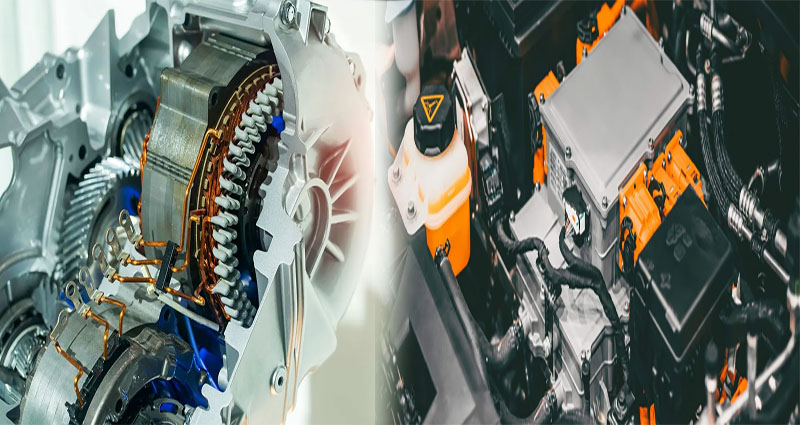
The electric motor serves as the propulsion system of an electric vehicle, converting electrical energy from the battery into mechanical energy to drive the wheels. Here are key points to consider regarding the electric motor’s role:

  • Efficiency: Electric motors are highly efficient, converting a high percentage of the electrical energy they receive into mechanical energy to drive the vehicle. This efficiency contributes to the overall energy savings and environmental benefits
… Continue reading >>>>