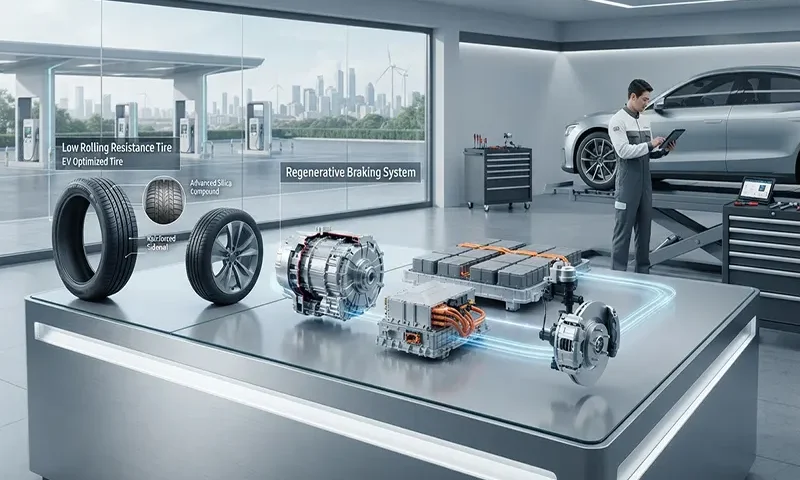
Low Rolling Resistance Tires and Regenerative Braking System Parts for Electric Cars

The Synergy of Efficiency

Maximizing electric vehicle range relies fundamentally on minimizing energy loss at the road contact patch and recovering kinetic energy during deceleration. Low rolling resistance (LRR) tires and regenerative braking systems form a dual-pillar efficiency matrix that extends real-world driving range by up to 25% to 30% without requiring larger, heavier battery packs. Understanding the intricate engineering behind these components is vital for optimizing vehicle efficiency, reducing thermal stress, and extending component lifespans.

Low Rolling Resistance Tires: Chemistry, Compounds, and Construction

Tire hysteresis—the energy lost as a tire deforms and recovers under load—accounts for roughly 20% of total vehicle energy consumption. EV-specific LRR tires are engineered to drastically cut this loss.

  • Silica-Rich Compounds: Modern LRR tires utilize high-dispersible silica matrices and specialized functionalized polymers that minimize internal friction and heat generation during continuous rolling.
  • Structural Reinforcement: To support the heavy mass of high-voltage battery packs, these tires
Continue reading >>>>
Electric Vehicle Powertrain Components and Power Inverter Replacement Parts

The Evolution of EV Powertrains

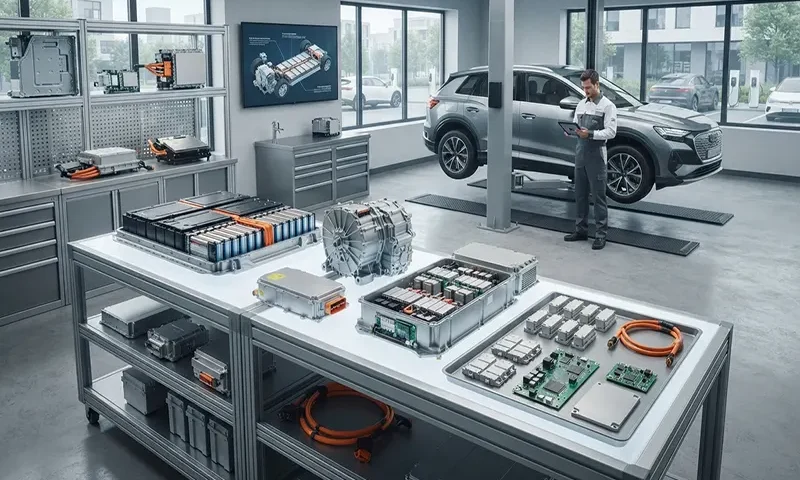
As millions of electric vehicles age past their initial factory warranties, automotive service bays are undergoing a profound transformation. Technicians are shifting away from traditional mechanical maintenance toward advanced electronic and high-voltage powertrain component servicing. Within this high-tech ecosystem, the power inverter—operating alongside integrated traction motors and high-voltage distribution assemblies—represents the single most critical high-value replacement category in the modern EV aftermarket.

The Power Inverter: Architecture, Failure Modes, and Silicon Carbide

The power inverter is the computational and switching heart of the electric powertrain, responsible for converting direct current (DC) from the high-voltage battery into variable-frequency alternating current (AC) for the traction motor.

  • Silicon-Carbide (SiC) Integration: Modern inverter replacements are rapidly moving away from legacy silicon-based insulated-gate bipolar transistors (IGBTs) toward advanced silicon-carbide (SiC) MOSFET modules. Operating at switching frequencies exceeding 20 kHz and voltage thresholds from 800V to 1,000V, SiC modules slash thermal dissipation
Continue reading >>>>
High Performance Electric Vehicle Battery Replacement Packs and Home Charging Accessories

The Aftermarket Power Evolution

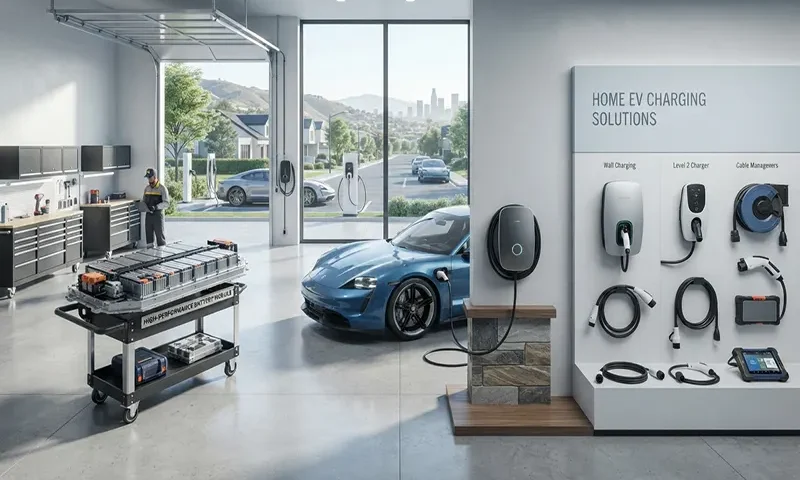
As early-generation electric vehicle fleets mature past factory warranties, the automotive aftermarket is experiencing a radical shift. The focus has moved past simple mechanical consumables toward advanced energy storage upgrades and high-power residential integration. High-performance battery replacement packs and next-generation home charging ecosystems are redefining vehicle longevity, transforming secondary market EVs into modular, highly efficient mobile assets.

High-Performance Replacement Packs: Chemistries and Modularity

The aftermarket energy sector has evolved far beyond basic OEM cell swaps, introducing high-density solutions designed to enhance original factory specifications.

  • Advanced Chemistries: Aftermarket pack developers are increasingly deploying high-voltage lithium-iron-phosphate (LFP) chemistries for enhanced thermal safety and longevity, alongside early-adopter silicon-anode options that push volumetric energy densities past 350 Wh/kg.
  • Modular Architecture: Rather than forcing consumers into expensive, full-pack replacements, modern aftermarket suppliers utilize modular cell designs. This allows certified workshops to isolate and replace degraded individual modules, slashing repair overhead.
  • Performance
Continue reading >>>>
Essential Replacement Parts and Maintenance Components for Electric Vehicles

The Evolving EV Aftermarket Landscape

The global electric vehicle aftermarket is scaling rapidly, tracking past the hundred-billion-dollar threshold as early-generation fleets age out of factory warranties. Unlike internal combustion engine (ICE) vehicles, which rely heavily on periodic fluid changes, exhaust servicing, and complex engine overhauls, the EV aftermarket centers on high-load mechanical wear, specialized thermal management systems, high-voltage architecture, and software-driven upkeep. As global EV adoption matures past early-adopter curves, independent workshops and authorized service networks alike are confronting an entirely restructured catalog of high-demand replacement components and maintenance protocols.

High-Load Mechanical Components: Tires, Brakes, and Suspension

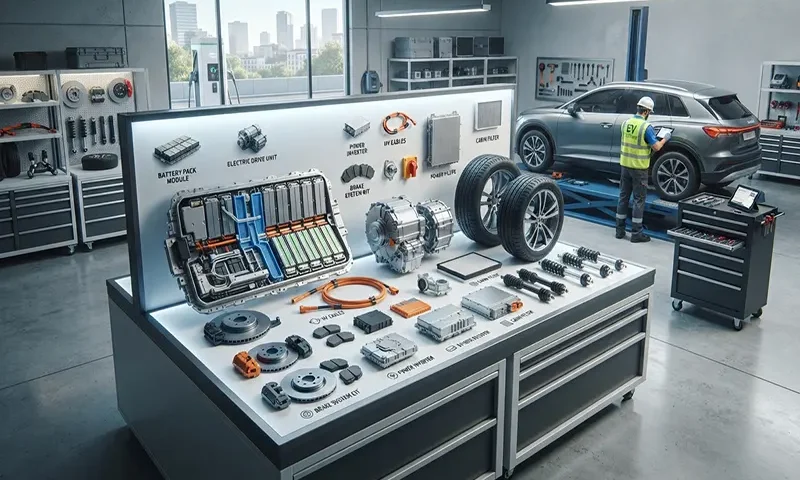
The unique physical dynamics of battery electric vehicles—characterized by massive curb weights and instant torque delivery—create aggressive wear patterns that elevate mechanical components to top-tier aftermarket revenue drivers.

  • EV-Specific Tires: Heavy battery packs place continuous friction and structural load on rubber compounds, accelerating tread degradation by 20% to 30% compared to equivalent ICE
Continue reading >>>>
Types of Electric Car Charging Systems and Their Efficiency

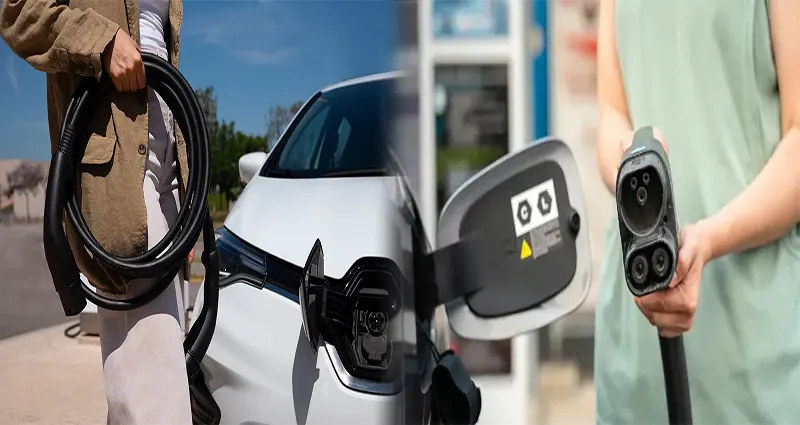
As electric vehicles continue to gain popularity due to their environmental benefits and cost-effective operation, the demand for efficient and reliable charging systems is on the rise. Various types of electric car charging systems are available to cater to different needs and preferences. Understanding the different options can help electric vehicle owners optimize their charging experience. Here are some of the most common types of electric car charging systems and their efficiency:

Level 1 Charging

Level 1 charging is the most basic and slowest form of charging for electric vehicles. It involves using a standard 120-volt household electrical outlet to deliver power to the vehicle’s battery. While Level 1 charging is convenient and accessible, it is also the least efficient option as it provides the slowest charging speeds. This type of charging is ideal for overnight charging or for emergency situations when a faster charger is not available.

Level 2

Continue reading >>>>