
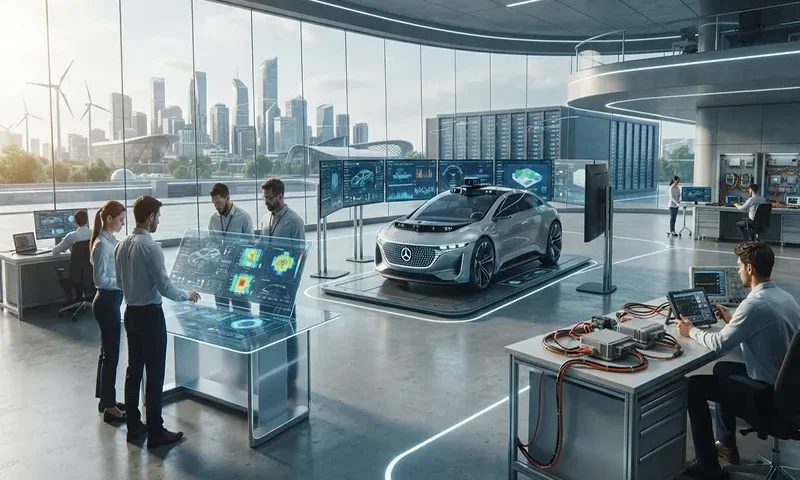
The Centralized Computing Paradigm
The automotive industry has crossed a decisive structural threshold, moving definitively away from distributed, single-function electronic control units (ECUs) toward centralized domain and zonal computing architectures. Valued at over $600 billion globally, Software-Defined Vehicles (SDVs) are no longer viewed as experimental concepts. Instead, they represent the core operational determinant of vehicle valuation, user experience, and long-term recurring revenue streams for both legacy original equipment manufacturers (OEMs) and electric vehicle pure-plays.
Zonal E/E Architectures and Silicon Convergence
The structural migration from dozens of isolated microcontrollers to high-performance zonal controllers and central compute clusters is redefining physical vehicle design.
- Hardware and Software Decoupling: By routing local sensors and actuators through 4 to 6 regional zone controllers connected via multi-gigabit automotive Ethernet backbones, automakers are cutting wiring harness lengths by up to 60%, drastically reducing vehicle curb weight.
- High-Performance SoCs: Advanced system-on-chips (SoCs) equipped with integrated AI accelerators now manage simultaneous workloads—spanning advanced driver assistance systems (ADAS), digital cockpits, and chassis dynamics—on unified digital platforms.
- Tier-1 Transformation: Traditional tier-one suppliers are rapidly evolving into software-first integration partners, forging deep strategic alliances with global cloud hyper-scalers and semiconductor giants to supply scalable electronic foundations.
Operating Systems, Middleware, and Open Standards
Managing millions of lines of automotive code requires a radical overhaul of software development methodologies, safety compliance frameworks, and deployment pipelines.
- Open-Source vs. Proprietary Stacks: Automakers are aggressively balancing proprietary user-interface operating systems with standardized open-source middleware initiatives (such as Eclipse SDV and adaptive AUTOSAR frameworks) to curb escalating software development costs.
- Safety and Cybersecurity Compliance: With software complexity surging, engineering organizations must enforce strict functional safety protocols (ISO 26262) and rigorous cybersecurity mandates (ISO/SAE 21434) to protect connected vehicle architectures from external interference.
- CI/CD Pipeline Integration: Transitioning to continuous integration and continuous deployment (CI/CD) allows software teams to push iterative code changes and security patches rapidly from cloud development environments directly to vehicle fleets.
Monetization, Over-the-Air (OTA) Updates, and Feature-on-Demand
The post-sale business model of the modern automotive sector relies heavily on continuous digital engagement and remote feature provisioning.
- Over-the-Air (OTA) Economics: Executing high-frequency, flawless OTA updates across millions of distributed vehicles requires resilient edge-to-cloud data pipelines, dual-bank flash memory configuration for secure rollback protection, and robust cryptographic code signing.
- Subscription Ecosystems: Feature-on-demand (FoD) models are maturing, allowing owners and commercial fleet operators to unlock enhanced ADAS capabilities, upgraded battery thermal profiles, and premium infotainment options via subscription or pay-per-use structures.
Strategic Outlook and Long-Term Industry Roadmap
Sustaining market dominance through the remainder of the decade requires automotive enterprises to master digital talent acquisition, streamline agile software integration, and maintain uncompromised cybersecurity discipline. Automakers that successfully unify their centralized electronic architectures with seamless cloud connectivity will secure high-margin recurring revenues. Ultimately, software-defined agility will dictate brand survival and long-term profitability across the global mobility landscape.

