Commercial Fleet Used Electric Vehicle Remarketing and Resale Strategies

The Fleet Electrification Wave

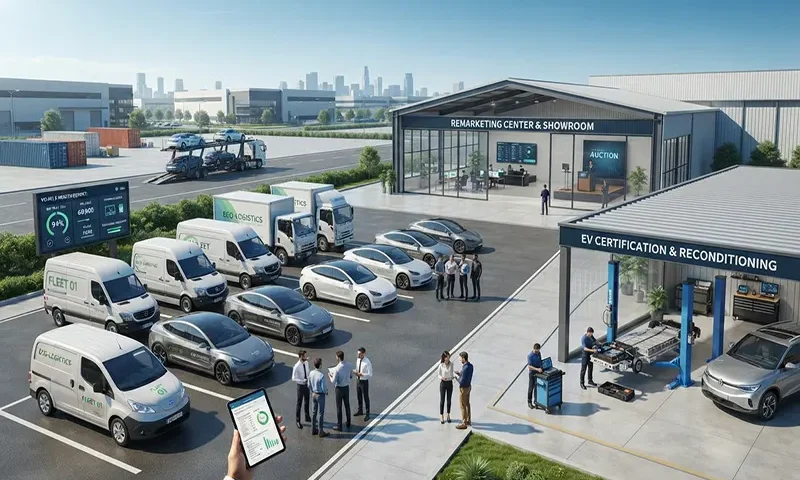
Early corporate commitments to fleet electrification have reached a critical milestone, with hundreds of thousands of commercial delivery vans, passenger pools, and light utility trucks approaching their first remarketing cycles. Traditional fleet disposal models are proving insufficient for electric vehicles. Maximizing residual value requires specialized battery health transparency, targeted digital remarketing channels, and proactive lifecycle planning to navigate an evolving secondary market.

Residual Value Volatility and Valuation Metrics

Managing depreciation curves for commercial electric vehicles requires moving beyond traditional mileage-and-age appraisals to incorporate real-time operational data.

  • Predictive Analytics: Modern fleet operators use telematics data—tracking depth-of-discharge frequencies, fast-charging ratios, and thermal exposure—to forecast accurate residual values long before vehicles hit the auction block.
  • Total Cost of Ownership (TCO) Balance: While commercial EVs often carry higher initial acquisition costs, lower per-mile operational and maintenance expenses during their primary service life can offset depreciation hits if remarketing timing is
Continue reading >>>>
Electric Vehicle Powertrain Components and Power Inverter Replacement Parts

The Evolution of EV Powertrains

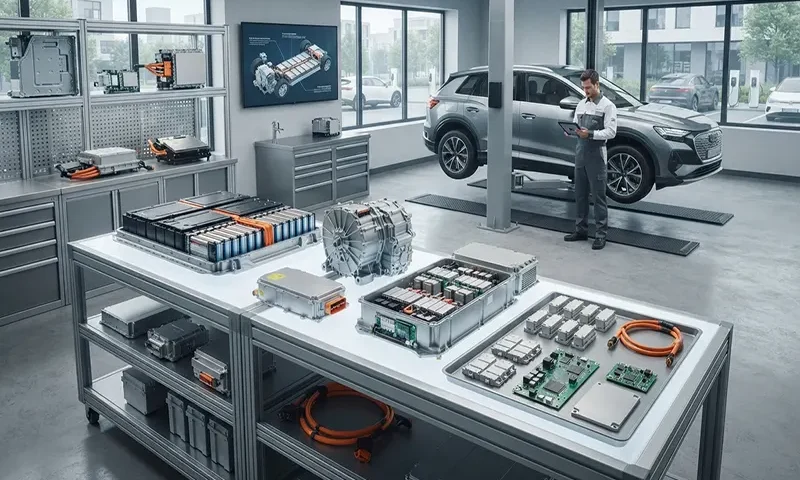
As millions of electric vehicles age past their initial factory warranties, automotive service bays are undergoing a profound transformation. Technicians are shifting away from traditional mechanical maintenance toward advanced electronic and high-voltage powertrain component servicing. Within this high-tech ecosystem, the power inverter—operating alongside integrated traction motors and high-voltage distribution assemblies—represents the single most critical high-value replacement category in the modern EV aftermarket.

The Power Inverter: Architecture, Failure Modes, and Silicon Carbide

The power inverter is the computational and switching heart of the electric powertrain, responsible for converting direct current (DC) from the high-voltage battery into variable-frequency alternating current (AC) for the traction motor.

  • Silicon-Carbide (SiC) Integration: Modern inverter replacements are rapidly moving away from legacy silicon-based insulated-gate bipolar transistors (IGBTs) toward advanced silicon-carbide (SiC) MOSFET modules. Operating at switching frequencies exceeding 20 kHz and voltage thresholds from 800V to 1,000V, SiC modules slash thermal dissipation
Continue reading >>>>