
The Evolving EV Aftermarket Landscape
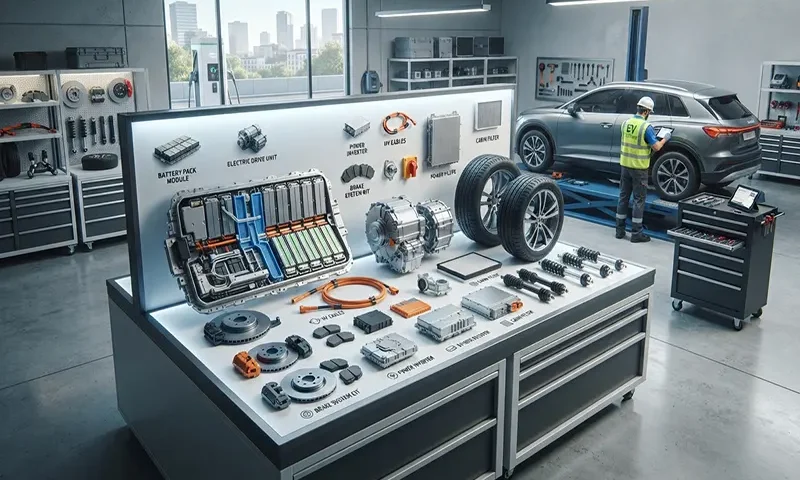
The global electric vehicle aftermarket is scaling rapidly, tracking past the hundred-billion-dollar threshold as early-generation fleets age out of factory warranties. Unlike internal combustion engine (ICE) vehicles, which rely heavily on periodic fluid changes, exhaust servicing, and complex engine overhauls, the EV aftermarket centers on high-load mechanical wear, specialized thermal management systems, high-voltage architecture, and software-driven upkeep. As global EV adoption matures past early-adopter curves, independent workshops and authorized service networks alike are confronting an entirely restructured catalog of high-demand replacement components and maintenance protocols.
High-Load Mechanical Components: Tires, Brakes, and Suspension
The unique physical dynamics of battery electric vehicles—characterized by massive curb weights and instant torque delivery—create aggressive wear patterns that elevate mechanical components to top-tier aftermarket revenue drivers.
- EV-Specific Tires: Heavy battery packs place continuous friction and structural load on rubber compounds, accelerating tread degradation by 20% to 30% compared to equivalent ICE platforms. This has triggered massive demand for specialized, low-rolling-resistance, foam-dampened tires engineered to handle high load indices while preserving vehicle range.
- Low-Use Friction Brakes: Because regenerative braking handles up to 80% of deceleration energy in daily driving, traditional brake pads and rotors suffer from prolonged under-use. This introduces unique aftermarket challenges such as surface rust, pitting, and contamination, requiring specialized friction materials designed to resist corrosion in low-activation environments.
- Heavy-Duty Suspension and Steering: The concentrated downward mass of floor-mounted battery packs places structural strain on shocks, struts, control arm bushings, and air suspension compressors, generating a steady aftermarket requirement for heavy-duty reinforcement components.
High-Voltage Architecture and Thermal Management Maintenance
Beyond structural hardware, the operational integrity of an EV depends heavily on its high-voltage (HV) and thermal control grids, which require specialized replacement parts.
- Thermal Management Assemblies: Precision liquid cooling systems—comprising specialized dielectric coolants, electronic chillers, high-flow water pumps, and multi-port thermal valves—are critical for preventing battery and inverter thermal runaway. Maintenance routines increasingly involve replacing degraded coolant loops and sealing gaskets to maintain optimal operating bands.
- Module-Level Battery Services: Rather than defaulting to expensive full-pack replacements, the modern aftermarket is shifting toward targeted module repairs, cell balancing, and individual contactor replacements. Certified shops rely on advanced diagnostic scanners to isolate failing cell groups within the battery management system (BMS).
- 12V Auxiliary Batteries: Despite housing massive high-voltage propulsion packs, modern EVs still depend on traditional 12V auxiliary batteries to power onboard computers, door locks, and safety relays. These low-voltage units remain a primary cause of unexpected roadside immobilization and represent a high-volume consumable replacement part.
The Digital and Software Aftermarket Intersection
The modern service bay has converged with the data center, fundamentally altering how replacement parts are integrated and maintained. Independent workshops can no longer rely purely on mechanical wrenches; servicing an EV demands high-voltage safety gear, insulated hand tools, and authorized diagnostic software licenses. Over-the-air (OTA) feature unlocks, ECU flashing, and cloud-based telematics monitoring are now standard tools used to evaluate cell health degradation and calibrate replacement sensors. Without access to open diagnostic gateways and component-pairing software, independent mechanics face severe bottlenecks when attempting to replace inverters, onboard chargers, or ADAS camera modules.
Strategic Outlook and Supply Chain Imperatives
Sustaining profitability in the EV service ecosystem through the remainder of the decade hinges on strategic inventory balancing and workforce upskilling. Aftermarket distributors must carefully manage working capital between high-turnover mechanical consumables—such as specialized tires and cabin air filters—and high-value electronic assemblies. Concurrently, the integration of circular economy principles, including remanufactured power electronics and second-life battery repurposing, will dictate market leadership. Workshops that successfully blend rigorous high-voltage safety compliance with advanced digital diagnostics will capture long-term loyalty in a rapidly transforming automotive landscape.

