
Global Automotive Industry News and New Vehicle Production Outlook

The Macro Manufacturing Landscape

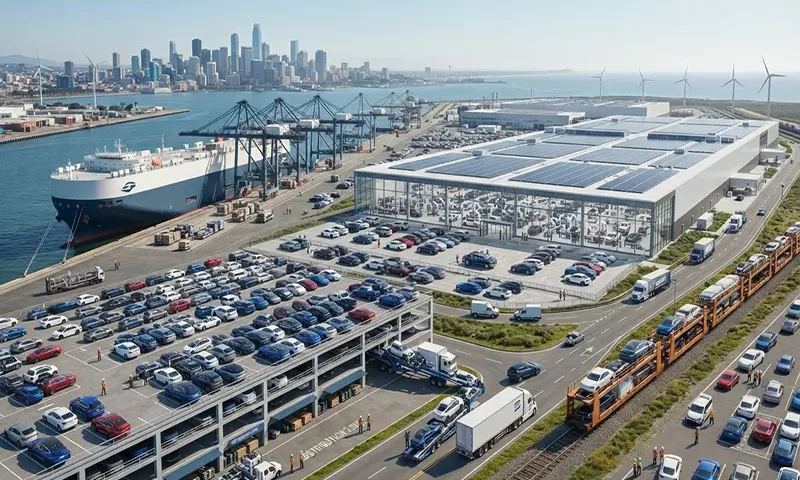
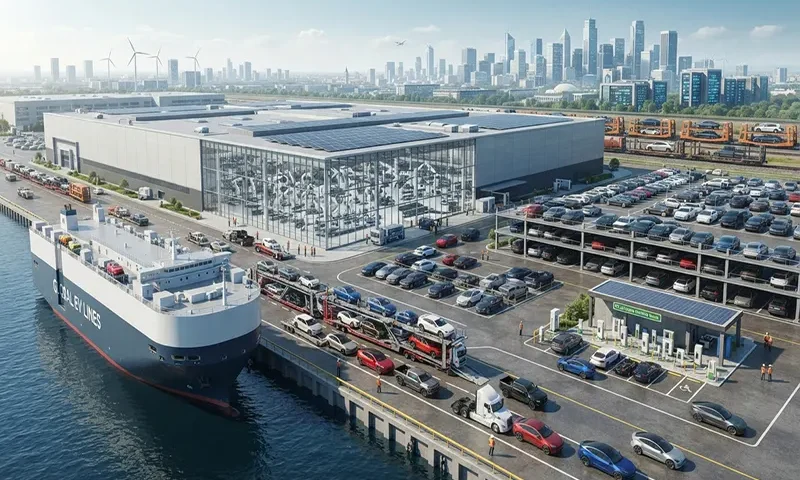
Global vehicle production is navigating a complex transition phase, balancing plateauing legacy volumes against accelerating electric and software-defined architectures. With global light vehicle production stabilizing at approximately 93 million to 94 million units, original equipment manufacturers (OEMs) face intense operational pressures. Slowing consumer demand in select Western markets, shifting subsidy frameworks, and evolving trade protectionism require automakers to restructure global supply chains, optimize capacity utilization, and adapt factory floors to multi-powertrain realities.

Regional Production Shifts and Footprint Redundancy

Manufacturing footprints are fragmenting as trade policies, local content rules, and dynamic tariff frameworks force a widespread move toward localized sourcing.

  • North America and Europe: Legacy producers are grappling with high operating costs, excess capacity, and uneven EV demand curves. To mitigate risk, plants are rapidly retooling to support flexible, multi-powertrain assembly lines capable of mixing internal combustion engines (ICE), hybrids (HEVs), and battery electric vehicles (BEVs) on
Continue reading >>>>
Latest Electric Vehicle Market Trends and Global EV Industry News

Macro Market Milestones and the Dual Narrative

The global electric vehicle landscape has reached a defining structural inflection point, with cumulative worldwide sales capturing over 25% of the total passenger vehicle market. This aggregate milestone, however, encapsulates a complex dual narrative. Rapid model proliferation and hyper-scaling in dominant territories run parallel to localized policy adjustments, shifting regulatory timelines, and cooling adoption curves in select Western markets. The primary market driver is no longer forced legislative compliance alone, but rather a natural transition driven by model affordability, fierce price competition among original equipment manufacturers (OEMs), and an unprecedented wave of secondary market liquidity.

Regional Divergences and Emerging Powerhouses

Regional market paths continue to diverge sharply across major economic blocks. China maintains its position as the undisputed global powerhouse, where domestic EV penetration frequently approaches two-thirds of total car sales, backed by aggressive vertical integration and low manufacturing cost bases. Meanwhile, Southeast … Continue reading >>>>

Essential Replacement Parts and Maintenance Components for Electric Vehicles

The Evolving EV Aftermarket Landscape

The global electric vehicle aftermarket is scaling rapidly, tracking past the hundred-billion-dollar threshold as early-generation fleets age out of factory warranties. Unlike internal combustion engine (ICE) vehicles, which rely heavily on periodic fluid changes, exhaust servicing, and complex engine overhauls, the EV aftermarket centers on high-load mechanical wear, specialized thermal management systems, high-voltage architecture, and software-driven upkeep. As global EV adoption matures past early-adopter curves, independent workshops and authorized service networks alike are confronting an entirely restructured catalog of high-demand replacement components and maintenance protocols.

High-Load Mechanical Components: Tires, Brakes, and Suspension

The unique physical dynamics of battery electric vehicles—characterized by massive curb weights and instant torque delivery—create aggressive wear patterns that elevate mechanical components to top-tier aftermarket revenue drivers.

  • EV-Specific Tires: Heavy battery packs place continuous friction and structural load on rubber compounds, accelerating tread degradation by 20% to 30% compared to equivalent ICE
Continue reading >>>>
Latest Electric Vehicle Market Trends and Global EV Industry News

Macro Adoption Milestones

The global transition toward automotive electrification has reached a definitive inflection point. According to industry intelligence data, global electric vehicle sales are tracking to capture over 27 percent of total passenger vehicle sales worldwide, a massive leap from just 9 percent five years prior. While legacy adoption curves were predominantly dictated by heavy government subsidies and mandates, the current market is being propelled forward by fundamental improvements in vehicle economics, plunging lithium-ion battery prices, and a wave of affordable new model introductions.

However, this growth masks an increasingly fragmented global landscape. Regional divergences have widened significantly, with maturing markets and aggressive trade policies creating a complex matrix of challenges and opportunities for original equipment manufacturers (OEMs). Understanding these shifts is vital for automotive executives, investors, and supply chain strategists looking to navigate the remainder of the decade.

Regional Divergences: Leaders, Laggards, and Emerging Hotspots

China continues to … Continue reading >>>>

Is Business Setup in Dubai 2026 Tax Free?

The perception of Dubai as an entirely tax-free haven for businesses has seen significant evolution. While the emirate retains many attractive fiscal policies, the landscape for business setup in Dubai in 2026 is no longer one of absolute zero taxation across the board. Recent legislative changes, particularly the introduction of Corporate Tax, mean that entrepreneurs and companies must now approach their business setup with a nuanced understanding of the prevailing tax regime. It is crucial to examine the specifics to accurately determine the financial implications for operations in the coming years.

Key Takeaways

  • Dubai is no longer entirely ‘tax-free’ due to the introduction of a federal Corporate Tax.
  • A 9% Corporate Tax rate applies to mainland businesses with taxable profits exceeding AED 375,000.
  • Free Zones offer significant tax advantages, including a 0% Corporate Tax rate on qualifying income for eligible businesses.
  • A 5% Value Added Tax (VAT) is applicable to
Continue reading >>>>