
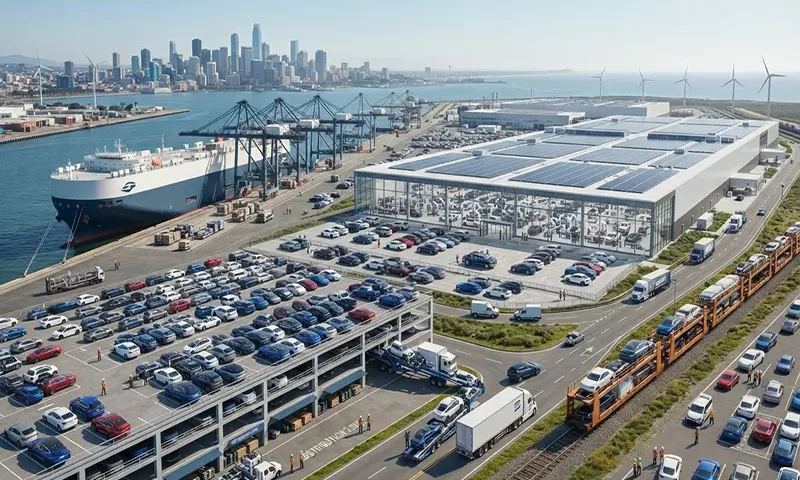
The Macro Manufacturing Landscape
Global vehicle production is navigating a complex transition phase, balancing plateauing legacy volumes against accelerating electric and software-defined architectures. With global light vehicle production stabilizing at approximately 93 million to 94 million units, original equipment manufacturers (OEMs) face intense operational pressures. Slowing consumer demand in select Western markets, shifting subsidy frameworks, and evolving trade protectionism require automakers to restructure global supply chains, optimize capacity utilization, and adapt factory floors to multi-powertrain realities.
Regional Production Shifts and Footprint Redundancy
Manufacturing footprints are fragmenting as trade policies, local content rules, and dynamic tariff frameworks force a widespread move toward localized sourcing.
- North America and Europe: Legacy producers are grappling with high operating costs, excess capacity, and uneven EV demand curves. To mitigate risk, plants are rapidly retooling to support flexible, multi-powertrain assembly lines capable of mixing internal combustion engines (ICE), hybrids (HEVs), and battery electric vehicles (BEVs) on a single platform.
- Asia-Pacific Dominance: China continues to cement its manufacturing leadership, accounting for roughly 37% of worldwide automotive output. Domestic volume expansion is being heavily complemented by aggressive cross-border manufacturing investments and export strategies targeting Southeast Asia, Latin America, and Europe.
Supply Chain Resiliency, Logistics, and Component Pressures
While the severe microchip shortages of prior years have largely abated, tier-one and tier-two supply networks remain vulnerable to localized geopolitical friction and critical material chokepoints.
- Buffer Stock Transition: Logistics strategies have permanently evolved away from lean, just-in-time (JIT) paradigms toward dual-sourcing and regional buffer inventories to insulate assembly lines from sudden shipping disruptions.
- Cost Inflation and Automation: Structural labor inflation and raw material volatility are driving high levels of capital expenditure into factory automation. Advanced robotics and AI-driven quality inspection systems are rapidly becoming standard on modern assembly lines to safeguard production margins.
Software-Defined Vehicle (SDV) Integration on the Assembly Line
The rapid shift toward Software-Defined Vehicles (SDVs) and advanced driver assistance systems (ADAS) has fundamentally transformed end-of-line manufacturing. Traditional mechanical assembly is now matched by complex digital flashing, sensor calibration, and cloud connectivity testing. Automakers are increasingly collaborating with global tech enterprises to standardize vehicle operating systems, forcing assembly plants to introduce specialized software validation bays. These digital testing gates represent critical bottlenecks, requiring robust cybersecurity integration before a vehicle can clear final quality control.
Outlook and Long-Term Strategic Imperatives
Sustaining market leadership through the remainder of the decade hinges on strict capital discipline, manufacturing agility, and sophisticated risk management. Automakers capable of balancing disciplined capacity investments with flexible, software-integrated production platforms will successfully weather current macroeconomic headwinds. Ultimately, production adaptability and resilient supply architecture will dictate which global enterprises capture long-term profitability in the next era of mobility.

